$58,910 was the median annual wage for graphic designers in the United States in May 2023. Graphic design jobs vary widely, though: a production artist preparing print files and a brand designer shaping a company’s identity solve different problems, even when both use Adobe Illustrator. The right role depends on the work you want to deliver and the teams you want to work with.
A degree can be useful, but it isn’t a universal entry requirement. Hiring teams look for design judgment, clear communication, and a portfolio that matches the job. Understanding those expectations helps you choose a realistic starting point and build toward the work you want.
Graphic designers create more than logos
A graphic designer turns information and business goals into visual communication. That can mean a package on a store shelf, a paid social ad, an event poster, or a set of templates used by a sales team. Logos are one kind of deliverable, not the whole profession.
Brand and marketing design
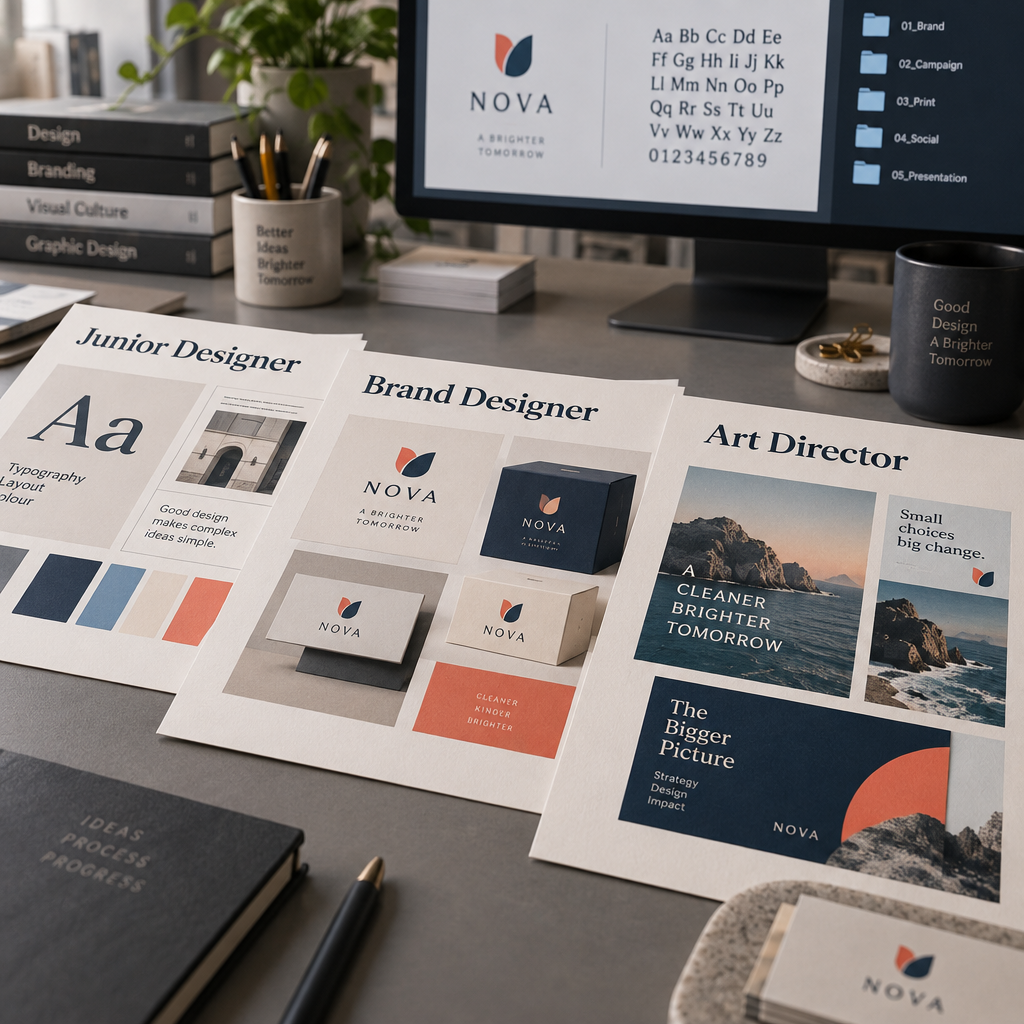
Brand designers develop or maintain visual systems: logos, type choices, color palettes, graphic elements, and rules for using them. A finished identity often includes a style guide and examples showing how the system works on items such as a website, presentation, or business card. The work calls for consistency across applications, not just a polished mark.
Marketing designers use those brand elements to make communication for specific campaigns and channels. They might adapt a product launch concept for Instagram, email, digital ads, and a trade show booth. Each format has its own dimensions and constraints, so the job includes making the message readable and recognizable as it changes shape.
The business context affects the design choices. A direct-to-consumer company may need product images and promotional assets that support online shopping, while a nonprofit could prioritize clear, accessible information about a community program. In both cases, designers need to understand the audience and the purpose before they settle on a visual direction.
Digital design and production
Graphic design also covers digital layouts: landing pages, email templates, presentation decks, and graphics for apps. A designer might plan hierarchy and visual style without owning the full interface or the research behind it. The handoff can include organized files, export-ready images, and notes that explain how the design should be applied.
Production artists prepare approved creative for accurate delivery. They may check dimensions, image resolution, color settings, linked files, and font handling before packaging a file for a printer or publisher. That work is detail-heavy, and a small preflight error can delay a print run or produce a costly reprint.
Graphic design jobs therefore differ in both the final product and the responsibility attached to it. A useful way to assess a posting is to ask what you’ll make, who will review it, and what must happen before the work is considered finished.
Match the job title to the deliverables
Titles can overlap between companies, so read past the label. A “visual designer” at one organization may create marketing assets; at another, the role may focus on screens within a software product. Look for the deliverables, approval process, and partner teams described in the posting.
Graphic, brand, and production roles
A graphic designer usually works across a range of visual communication. Common assignments include campaign graphics, brochures, packaging, presentations, and digital ads. The role may involve interpreting a brief, presenting concepts, revising work based on feedback, and preparing final files for the channel where they’ll appear.
A brand designer concentrates on identity and consistency. They may develop a visual direction for a new company or extend an existing system to cover a new product line. Expect more attention to brand guidelines, tone, and long-term use than in a role centered on producing one short campaign.
A production artist focuses on execution after a concept or layout has been approved. Typical tasks include resizing a campaign for multiple placements, updating product details, and checking a print-ready PDF. If you like precise file work and defined specifications, the role can be a strong fit; it usually offers less ownership of the original concept.
Art direction, motion, and web design
An art director guides a visual concept and the people producing it. Depending on the company, the job can involve setting a campaign’s look, giving feedback to designers and photographers, and presenting creative choices to marketing or leadership. It generally requires a track record of strong work and sound judgment, not just proficiency in a design application.
Motion graphics designers bring type, shapes, and images into movement. They may create animated titles, short product explainers, or ad variations in tools such as Adobe After Effects. Web designers focus on the visual organization of web pages, often working with developers to make sure layouts and assets function across screen sizes.
Web design and UX/UI design can overlap, but they aren’t interchangeable. UX work considers how people complete tasks and move through a product; UI design focuses on interface elements and states. A graphic designer who wants to move into UX/UI should add skills such as prototyping in Figma and documenting interactive behavior, rather than relying on visual polish alone.
Skills hiring teams assess go beyond software
Software knowledge is useful because it helps you produce and revise work efficiently. It doesn’t show, by itself, whether you can choose a readable typeface, build a clear hierarchy, or respond well to a brief. Hiring teams need evidence of both visual fundamentals and the ability to apply them to business needs.
Visual fundamentals in everyday work
Typography affects how quickly someone can read and understand a design. A headline, body copy, and caption need distinct roles, with spacing and size that make the hierarchy apparent. In a dense one-page flyer, for example, type choices can determine whether a reader notices the event date before the supporting details.
Layout is the arrangement of those elements. A clear grid can help a designer adapt a campaign across a square social post, a wide banner, and a letter-size flyer without making every version look unrelated. Color theory helps guide contrast and mood, but contrast must also support readability; a brand palette is not useful if its text disappears against the background.
Good design decisions depend on the brief. Before opening an application, clarify the intended audience, message, channel, and approval owner. If the team needs an ad that drives sign-ups, a visually interesting composition still falls short if the call to action is hard to find or the offer is unclear.
Tools, feedback, and communication
Choose tools based on the work you’re targeting. Adobe Illustrator is common for vector graphics, Photoshop for image editing, and InDesign for multi-page layouts. Figma is widely used for collaborative interface work, while After Effects is used for motion. The posting’s workflow matters more than collecting every tool on a résumé.
Designers also need to explain their choices and work through feedback. A useful presentation connects a decision to the brief: a larger headline might improve scanability, while a consistent image treatment can help a campaign feel unified. When a stakeholder asks for a change, clarify the underlying concern before revising; the first request may describe a symptom rather than the problem.
File organization and handoffs matter, too. Use clear filenames, keep linked assets together, and confirm export settings with the person receiving the work. A developer, printer, or marketing manager may need different specifications. A designer who anticipates that handoff reduces avoidable revisions and helps the team put approved work into use.
Build a portfolio around the job you want
A portfolio is evidence of how you think, not just a gallery of finished images. Hiring managers need to see work that resembles the role’s actual assignments and understand what you contributed. Three focused, well-explained projects can make a stronger case than a large collection with no context.
Choose and present useful samples
Select projects that match the deliverables in the job posting. If you’re applying for a brand role, include an identity system and examples of how it works across applications. For production work, show accurate adaptations or file-preparation thinking. For marketing design, explain how a piece addresses its audience and channel.
For each project, briefly identify the goal, your role, and the decisions you made. If it was a team project, say which parts you owned; don’t imply you created work that belonged to someone else. Where you have no paid experience, self-initiated work or a clearly labeled redesign exercise can demonstrate judgment, as long as you don’t present it as commissioned work.
A practical portfolio-building sequence is:
- Pick one target role and collect several relevant job postings.
- Note repeated deliverables, tools, and collaboration expectations.
- Create or select projects that demonstrate those requirements.
- Write a short case description covering the brief, your contribution, and key choices.
- Review each project for legibility, accurate credits, and working links.
Keep the portfolio easy to scan on a phone and desktop. Put your strongest relevant work first, and remove pieces that distract from the role you’re pursuing. If you show a campaign in several formats, include enough versions to demonstrate consistency without making a recruiter click through nearly identical images.
Education and entry-level qualifications
A bachelor’s degree in graphic design or a related field can provide structured practice, critique, and access to internships, but it isn’t always required. Employers may accept a portfolio, relevant experience, or training in place of a degree. Requirements vary by employer and industry, so read the posting rather than treating one qualification as a universal rule.
Entry-level candidates can build experience through internships, campus organizations, nonprofit projects, or carefully scoped freelance work. Agree on the deliverable, deadline, and revision expectations before starting. Even an unpaid or self-directed project should have a clear brief; otherwise, it may produce attractive images without proving you can solve a real communication problem.
Career paths run from junior execution to creative leadership
Many designers start in junior roles, where they work from established guidelines and get feedback from more experienced colleagues. Assignments might include updating a presentation, resizing campaign assets, or producing a first layout from a brief. The job builds speed and judgment through repeated review, not merely through years spent using software.
A production role can also be an entry point. It builds confidence with specifications, file setup, and repeatable workflows. Someone who wants more concept development can use that experience to demonstrate stronger layout decisions or contribute campaign ideas, then pursue a broader designer role as opportunities arise.
Specialization is another path. Designers may focus on branding, packaging, editorial design, motion graphics, or digital campaigns. A specialist’s portfolio should make that focus visible: a packaging portfolio needs examples of product labels or packaging systems, while a motion portfolio should show finished sequences and indicate the designer’s contribution.
Senior designers often take on more complex projects and work with less day-to-day direction. They may shape concepts, manage client or stakeholder feedback, and help less experienced designers improve their work. “Senior” isn’t defined by a fixed number of years; employers typically assess the scope of your past work and how independently you can deliver.
From there, some designers move into art direction, design management, or creative leadership. Those roles add responsibilities such as setting creative standards, assigning work, presenting decisions, and coordinating with marketing or product teams. People who prefer making the work may choose a specialist track instead; advancement doesn’t have to mean leaving design production.
In-house, agency, and freelance work have different tradeoffs
An in-house designer works within one organization and usually develops a close understanding of its products, audience, and approval process. The work might include ongoing campaign assets, sales materials, and updates to brand standards. This setting can offer sustained ownership, but the range of visual challenges depends on the company’s needs and team size.
In-house hiring makes sense when a business has a steady flow of design work and needs someone who can respond regularly to internal teams. A small team may ask one designer to cover several formats, so clarify the expected mix of brand, marketing, and digital work before accepting a role. A job title alone won’t tell you whether the workload fits your strengths.
An agency works with multiple clients and brings a team to projects with defined goals and timelines. Designers may move between brand work, websites, campaigns, or product launches, collaborating with strategists, developers, and account leads. The pace can be brisk, and client feedback may mean revising creative direction after a presentation.
Businesses often use agency support when they need specialized skills or extra capacity for a launch, website, or campaign but don’t have enough ongoing work to justify a full-time hire. An in-house designer can provide continuity; an agency can add disciplines and scale around a project. The tradeoff is that external teams need a clear brief, decision-maker, and access to timely feedback.
Freelancing gives designers more control over clients and schedules, but it also adds sales, contracts, invoicing, and project management to the work. Define the scope, number of review rounds, delivery formats, and payment terms in writing. A promising assignment can become unprofitable if a client expects unlimited revisions or expands the deliverables without adjusting the fee.
Conclusion
Choose a target role by listing the work you want to make and the people you want to collaborate with. Then compare that list with several current job postings and build portfolio samples that answer their actual requirements. If you prefer one company’s ongoing brand needs, look at in-house roles; if you want varied projects, explore agencies or freelance work. Your next portfolio project should make that choice clear.